Minimalist footwear,
made in Europe,
not in Asia.
More than 40 barefoot models with zero drop and a wide toe box — sandals, sneakers, ankle boots and minimalist shoes — built in Spanish workshops under EU labour law and REACH regulation. Private label, adaptation or bespoke development.
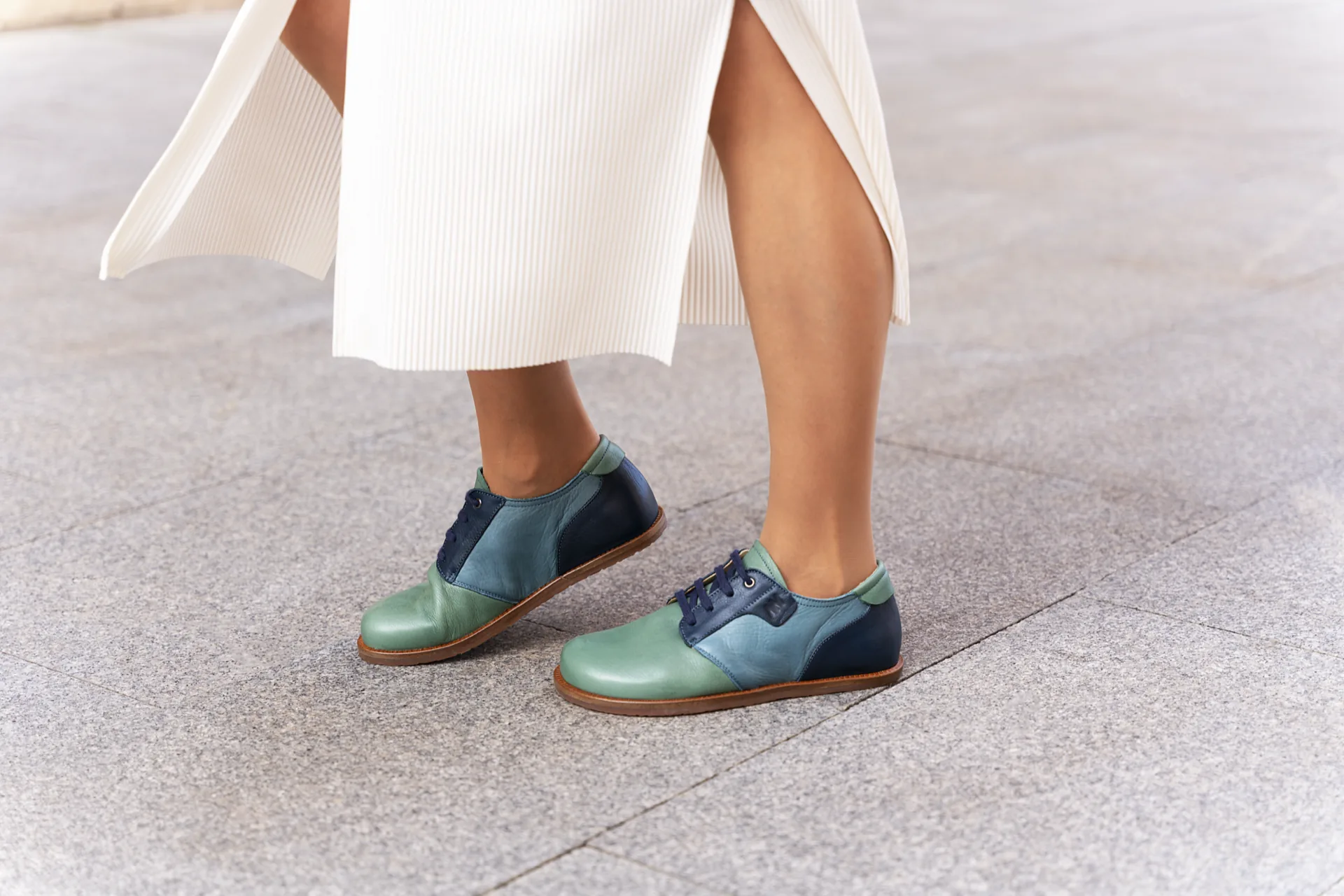
Zero drop, wide toe box, foot-shaped last.
A barefoot shoe is a zero-drop shoe with minimal cushioning and a foot-shaped last, designed to let the foot move as though it were bare. MSA Shoes represents the European minimalist-footwear cluster within the Spanish shoe industry: factories equipped with dedicated lasts shaped to the foot, flexible soles and a wide-toe-box construction, produced to EU REACH standards with transparent supply chains.
What a Spanish barefoot shoe looks like
Our partners build on foot-shaped lasts with 10–14 % more toe volume than conventional lasts. Soles measure 4.0–4.5 mm at the forefoot, with zero heel-to-toe drop and a pattern that ensures grip and flexibility. Uppers are usually leather, waxed canvas, recycled polyester or responsibly sourced suede. Linings follow the barefoot standards: no arch support, no metatarsal bar, no heel counter.
Construction methods: cementing (minimalist sneakers, sandals), Strobel + direct attach (flexible shoes).
Who the line is not for
Barefoot is not meant for high-performance running brands aimed at elite athletes — that segment is already covered by other specialist manufacturers. Nor is it aimed at cheap mass-market fast fashion.
It is built for wellness retail, DTC brands, outdoor and hiking crossover categories, and physiotherapy and podiatry specialists who are tired of explaining to their customers the risks of an Asian supply chain.
Three barefoot categories,
one single last family.
Our barefoot line rests on a single family of foot-shaped lasts, extended into three sales categories. A consistent fit across the whole range, one shared identity.
Barefoot sandals
Barefoot sneakers
Barefoot ankle boots
Questions about barefoot footwear.
What customers and buyers ask us most often about minimalist footwear.
What is a barefoot or physiological shoe?
« Barefoot » means « with bare feet ». This kind of footwear is designed to protect the foot from outside elements (asphalt, stones, cold) without hindering its natural movement. The goal is for your feet to walk and develop as if you were barefoot.
What are the main features of barefoot shoes?
• Wide toe box: room for the toes to spread instead of being squeezed together.
• Thin, flexible sole: lets you feel the ground and stimulates the nerve endings.
• Zero drop: completely flat. The heel and the toe sit at the same height, which respects the natural alignment of the spine.
• No artificial anatomical element: no arch-support insole and no artificial cushioning, so the foot works and strengthens on its own.
Why switch to barefoot footwear?
Walking in barefoot shoes strengthens the muscles of the foot and legs, improves balance, corrects posture and helps prevent common disorders such as bunions (hallux valgus), plantar fasciitis or claw toes.
It is my first time — do I need a break-in period?
Yes, it is strongly recommended. Your feet and calves have grown « sleepy » over the years because of the stiff, heeled soles of conventional shoes. Start by wearing them a few hours a day or on short walks, then build up the duration gradually as your muscles wake up and grow stronger.
How do I find my barefoot size?
In barefoot footwear, free space is essential. Do not look for a « snug » fit. When you measure your foot (heel to big toe), add a margin of 0.8 to 1.2 cm of room for adults (and 1.0 to 1.5 cm for children) so the toes can spread out as you walk.
They feel too wide or too big around the toes — is that normal?
That is the intended feel. Visually it can be surprising at first, but your toes need that space to spread with every stride. If the shoe does not slip at the heel or the instep, the size is right.
Can they be used for running or sport?
We offer models for everyday (casual) use and others designed for sport or trail. If you plan to run in them, the transition must be even slower and more gradual, in order to shift your technique towards a forefoot (metatarsal) landing rather than a heel strike.
Are they suitable for orthotic insoles?
Barefoot footwear aims to let the foot strengthen on its own, so supportive insoles often run counter to that principle. Nevertheless, if you wear prescription insoles, many models let you remove the barefoot insole and slip in your own, while keeping the benefit of the wide toe box. Ask your podiatrist for advice first.
Do you produce vegan barefoot shoes?
Yes. We can offer models made with vegan materials.
Do your barefoot shoes have arch support?
No. That would go against their principle. Our barefoot line is genuinely flat, unsupported and flexible. For customers who want light arch support while keeping a barefoot look, we recommend our BIOS sandal line, fitted with a cork footbed under a neutral arch.
Barefoot, made
in Spain — discover the range.
With a three-point brief — markets, volumes, target price — we reply within 48 hours.